History of Louisbourg

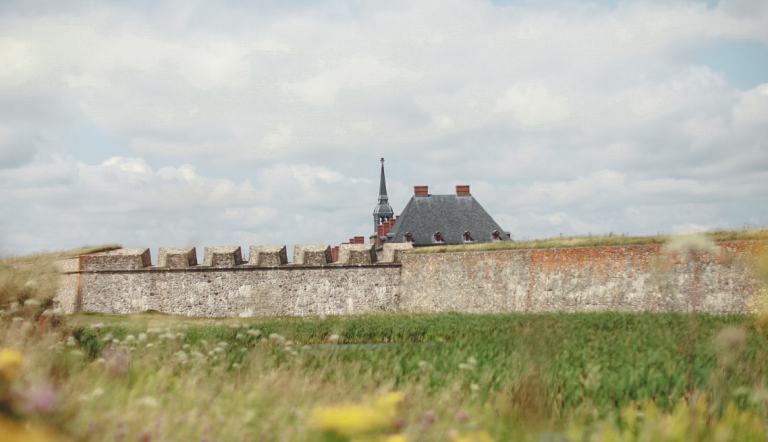
Louisbourg is the capital of the Ile Royale colony. It is a town enrich by French from 1713 to 1758. It was the central profitable unit for mercantile shipping and cod fishery between the New World and Europe whereas these countries have regular commercial contact with other industrialized countries like New England, Quebec, West Indies, and France. Apart from being the central unit for profits, Louisbourg was a community of monumental entrance gates, careening facility, lighthouse, royal storehouse, massive barracks, wharfs, gardens, warehouses, and homes.

In 1713, French people came to Louisbourg after ceding Newfoundland and Acadia to the British under the Treaty of Utrecht. This treaty ended the war of Spanish succession. The only remaining possession of France in Louisbourg is the Atlantic Canada where the islands of Prince Edward and Cape Breton are situated. These islands were then called as the Isle Saint-Jean and Isle Royale. To continue the profitable cod fishery in Grand Banks, the French people used the islands as a base. Eventually, they began constructing the fortified town of Louisbourg in 1719, and were completed in 1745 prior to the occurrence of siege.
The community of Louisbourg comprises of 1,200 civilians, who were protected by a garrison of 500 soldiers and some fortified stonewalls. The Department of the Marine employed the soldiers who went under the command of a hierarchy. The hierarchy consists of the civil administrator, the governor, and some associated bureaucracies.

A rag tag military force from New England attacked the fortress community of Louisbourg in 1745 because of its strategic position. An English naval contingent supported the military force with 150 ships and 16,000 troops. The siege lasted for seven weeks after the civilian and garrison population surrendered. The inhabitants of community were sent to France; and, Louisbourg was garrisoned by the English troops and New England in 1749. In the same year, Louisbourg was return to French and flourished as a commercial center in the succeeding decades. Today, the Fortress of Louisbourg lies as a historical site for tourists and locals.
Louisbourg was captured and besieged again in 1758. This occurrence was a part of the major plot of the English troops against the French. The fortified stonewalls were dismantled systematically in 1760, and by 1768 the garrison transferred to Halifax. Despite the besiege, inhabitants of Louisbourg continued to dwell in the harsh area of the coastal.

The ruins of the fortress community in Louisbourg were reconstructed in 1960s, and this had been regarded as the largest reconstruction project in North America. The reconstruction is said to be the masterpiece portfolio of Parks Canada.

Over the decades, the town of Louisbourg had been very dependent on the sea. The earliest recorded visit to harbor by the Europeans was in 1597. Because of the town’s recognized military and economic potential, Louis XIV had secured the harbor and fishery of Louisbourg for France in 1713. He constructed a walled and well-fortified city. During the 18th century, Louisbourg was the third busiest seaport all over the continent of America. The local industries of the town include coal shipping, cod, crab, lobster fishing and processing, and sword fishing.